ReturnType, Parameters, and Readonly in TypeScript
Three more TypeScript utility types that I reach for regularly: ReturnType, Parameters, and Readonly. Each solves a specific problem.
23 Apr 2024
Three more TypeScript utility types that I reach for regularly: ReturnType, Parameters, and Readonly. Each solves a specific problem.
ReturnType — extract what a function returns
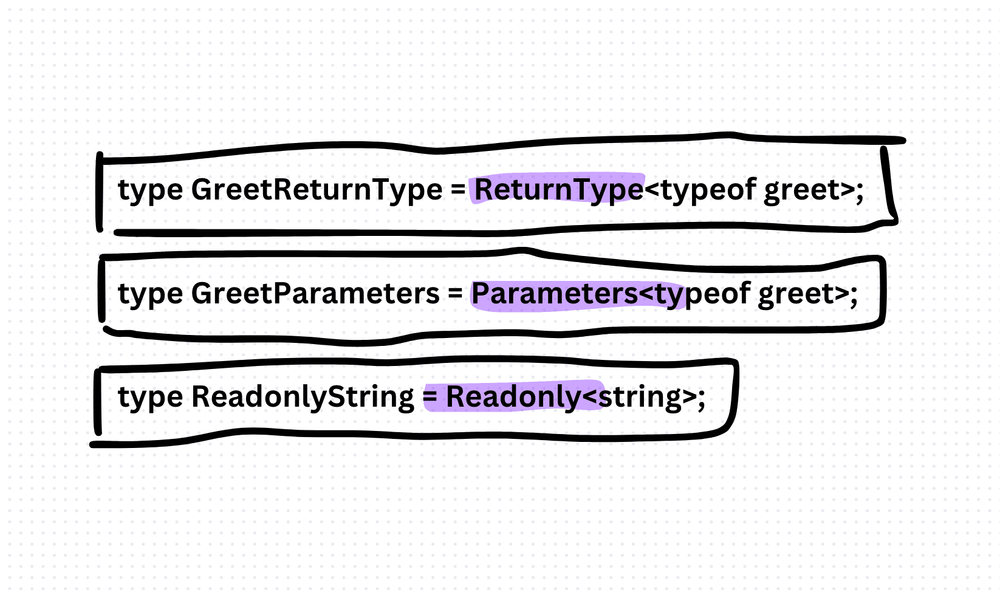
Instead of manually duplicating a function's return type, let TypeScript infer it:
function greet(name: string): string {
  return `Hello, ${name}!`;
}

type GreetReturnType = ReturnType<typeof greet>;
GreetReturnType is string. If I later change greet to return an object, the type updates automatically. No manual sync needed.
This shines when you're wrapping third-party functions and need their return type without importing internal types.
Parameters — extract a function's argument types
Same idea, but for inputs:
type GreetParameters = Parameters<typeof greet>;GreetParameters is [string] — a tuple of the argument types. Useful when building wrapper functions or middleware that forwards arguments to another function.
Readonly — prevent mutation
Readonly makes all properties of a type immutable:
interface Config {
  host: string;
  port: number;
}

const config: Readonly<Config> = { host: 'localhost', port: 3000 };
// config.port = 8080; // Compile error
Once set, you can't reassign any property. This is great for configuration objects, Redux-style state, or any data that should not change after creation.
The trade-off
Readonly only enforces immutability at the type level. At runtime, JavaScript doesn't care. If someone casts to any, they can still mutate. For true runtime immutability, pair it with Object.freeze.
These utility types reduce boilerplate and keep your types in sync with your actual code. But don't chain them into unreadable nesting. If a type gets complex, give it a name.
Production-Ready Systems with LLMs and Agents
A live Maven cohort, 5 October to 2 November: eight 90-minute sessions where you build LLM and agent systems that survive real traffic, real cost and real failure. Tuesdays and Thursdays, 7:30 to 9:00pm London.
Cohort 2 starts 5 October. Eight live sessions, $1,500.
View the live cohortKeep reading
- TypeScript Anti-Patterns That Cost You Twice: Build Time, Runtime, and the Interview
- The Frontend Toolchain Is Now Written in Rust and Go. What That Means for You
- oxlint vs ESLint: Why I Replaced ESLint with oxlint
- SystemJS Is Dead. Native ESM Finally Won.
- Replace Axios with a Simple Custom Fetch Wrapper (Production-Ready Guide)
- Stop Shipping ChatGPT Wrappers. Ship an Agent in TypeScript, or Don't Bother.